Recipes
Recipe library and spec editor
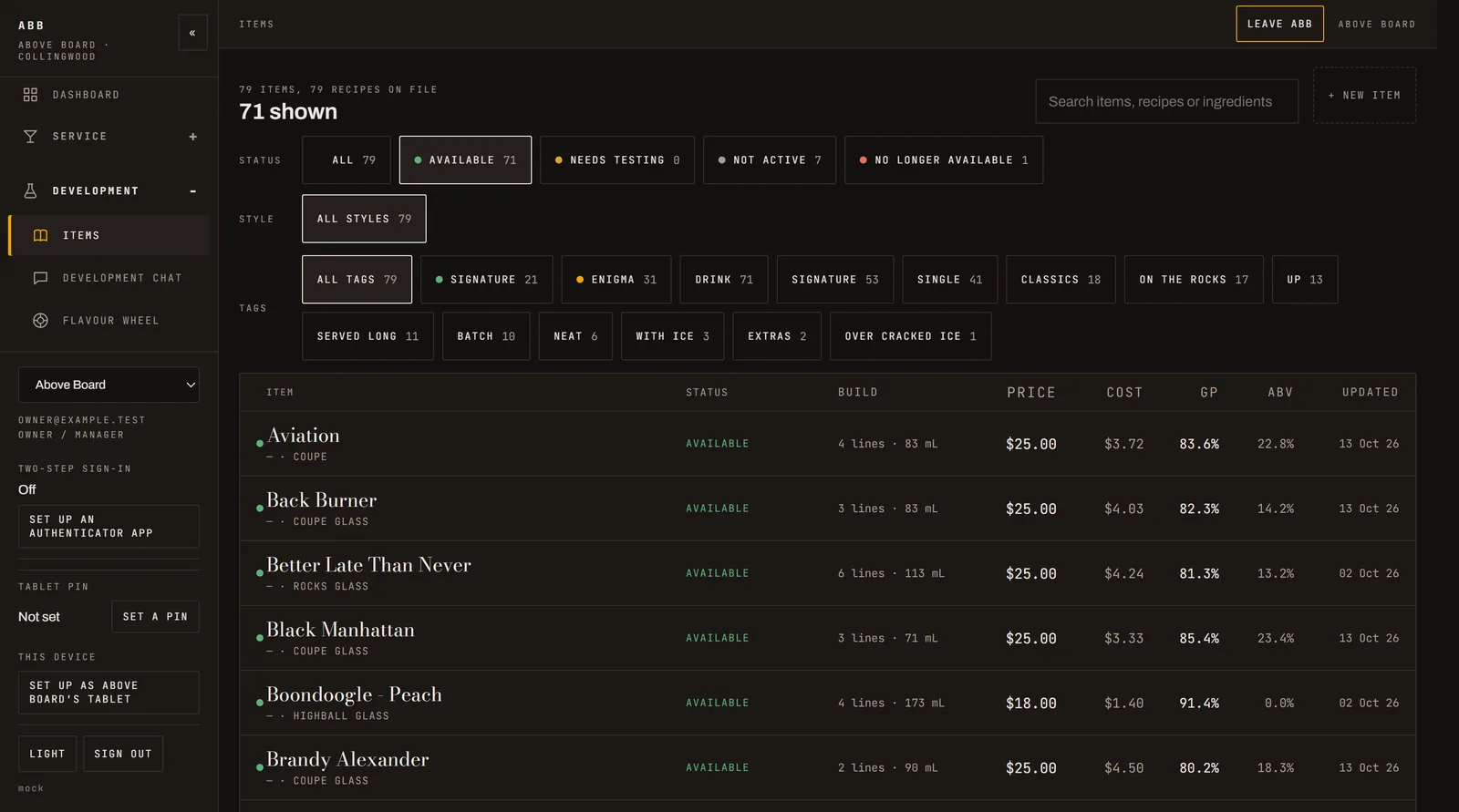
The full spec book with filters and live cost, gross profit and ABV per drink. Every save writes a version you can read back. One org-level spec, a per-venue price.
Recipe library, stocktake, prep, ordering, wastage and cost control in one place. Built with a working cocktail bar in Collingwood, so it fits the way a shift actually goes.
Spreadsheets, a no-code app, a chat thread and a notebook behind the till. BarOS replaces the lot, and each screen changes by who is holding the tablet.
The full spec book with filters and live cost, gross profit and ABV per drink. Every save writes a version you can read back. One org-level spec, a per-venue price.
An item is what the guest orders. It has a House recipe and labelled variants. Batches, syrups and juices are ingredients with a build, costed from it and counted in the stocktake.
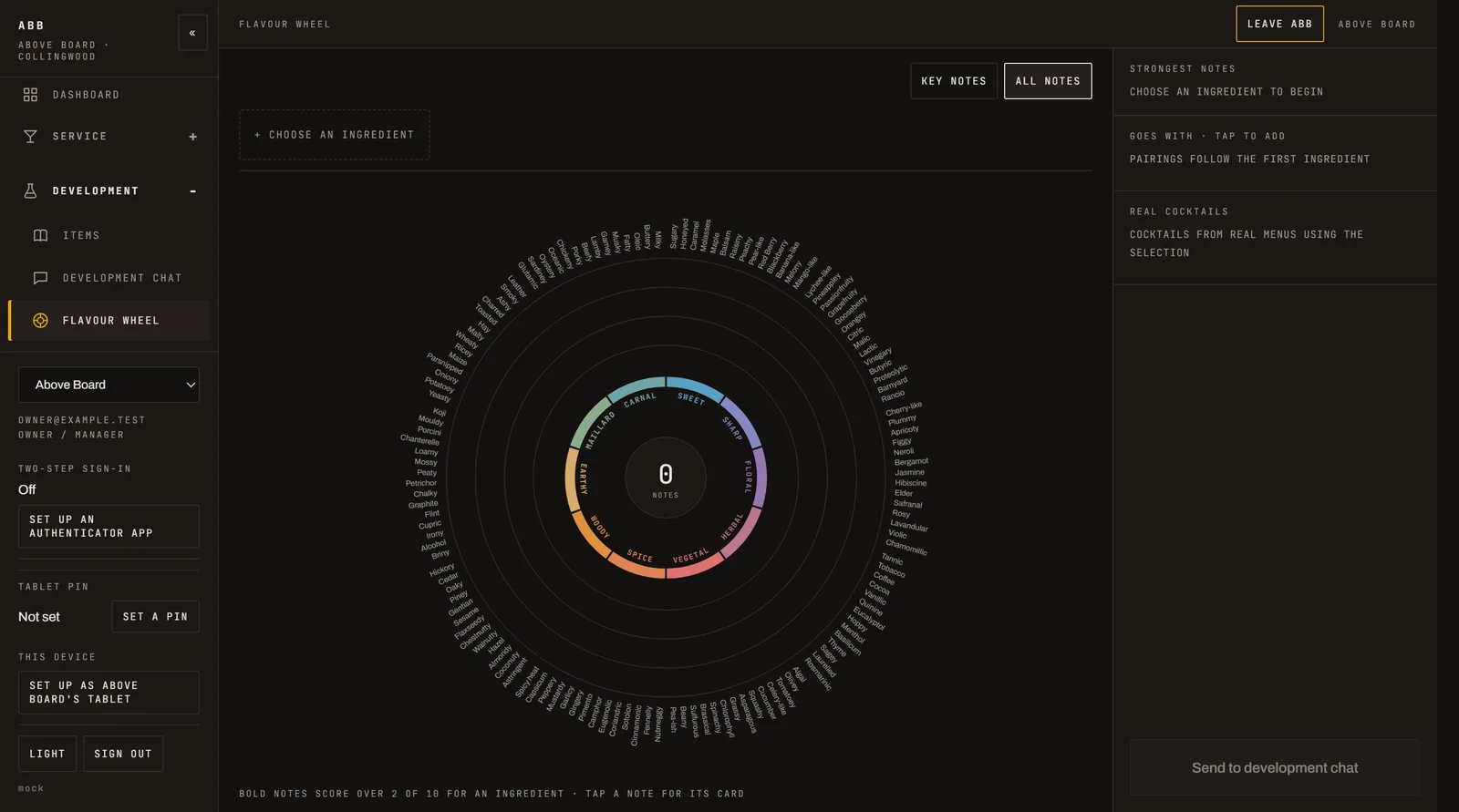
Aroma profiles from the flavour database as an interactive wheel. WhatTail asks a guest six tap-through questions and returns three drinks from tonight's list, ordered by margin that is never shown.
Count by tenths of a bottle or by weight on a scale. Variance is banded at 3% and 8%, and a manager finalises the count into stock levels.
Opening, batch, cleaning and closing tasks for a service date, with a 4am rollover so a late night still counts as the same night.
Record a spill, breakage, comp or staff drink against an ingredient or a whole cocktail. Costed on the server, approved by a manager.
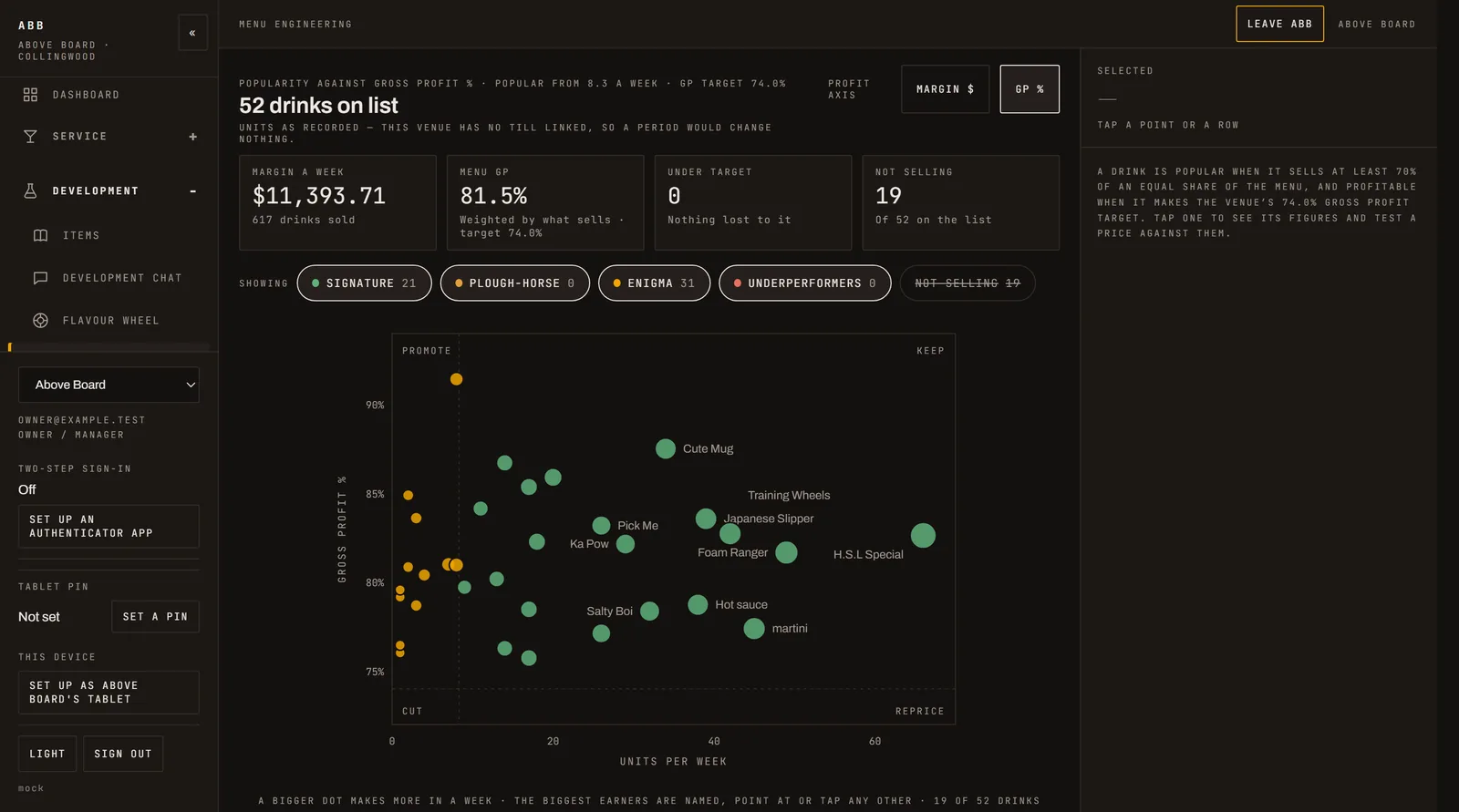
Units sold against margin in four quadrants: Signature, Plough-horse, Enigma and Underperformer. Leads with weekly margin and what being under target costs a week.
Reps, channels, terms, cut-offs and minimums per supplier. Orders draft from a par top-up, go through an approval queue against role limits, and enforce minimums.
Photograph a delivery slip and OCR fills the expense form and matches it to an open order. Invoices by month with GST ready for the BAS. The night's till reconciled with variances banded.
Modules the bar writes in its own words, with a check at the end and each person's progress kept. A question can be built from a drink, so it stays right whenever the recipe changes.
Owners, admins, managers and bartenders. Organisations own venues, so a group runs one menu at several price points with data isolated per tenant.
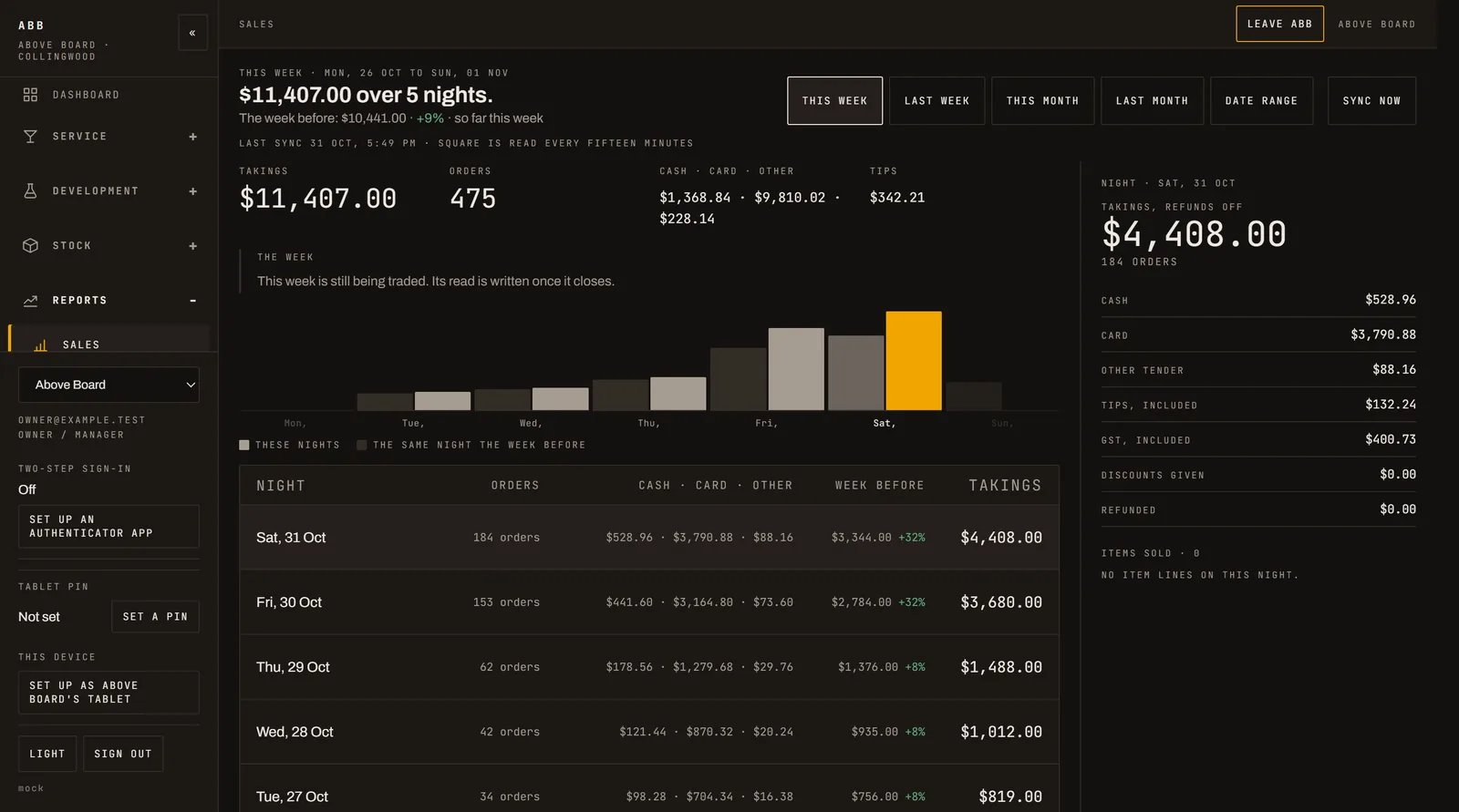
Sales from the till feed menu engineering and the reports. Expenses flow on to the bookkeeper. Supplier ordering channels are next on the list.
Taken from BarOS running Above Board's own list. Dark by default, because a bar is.
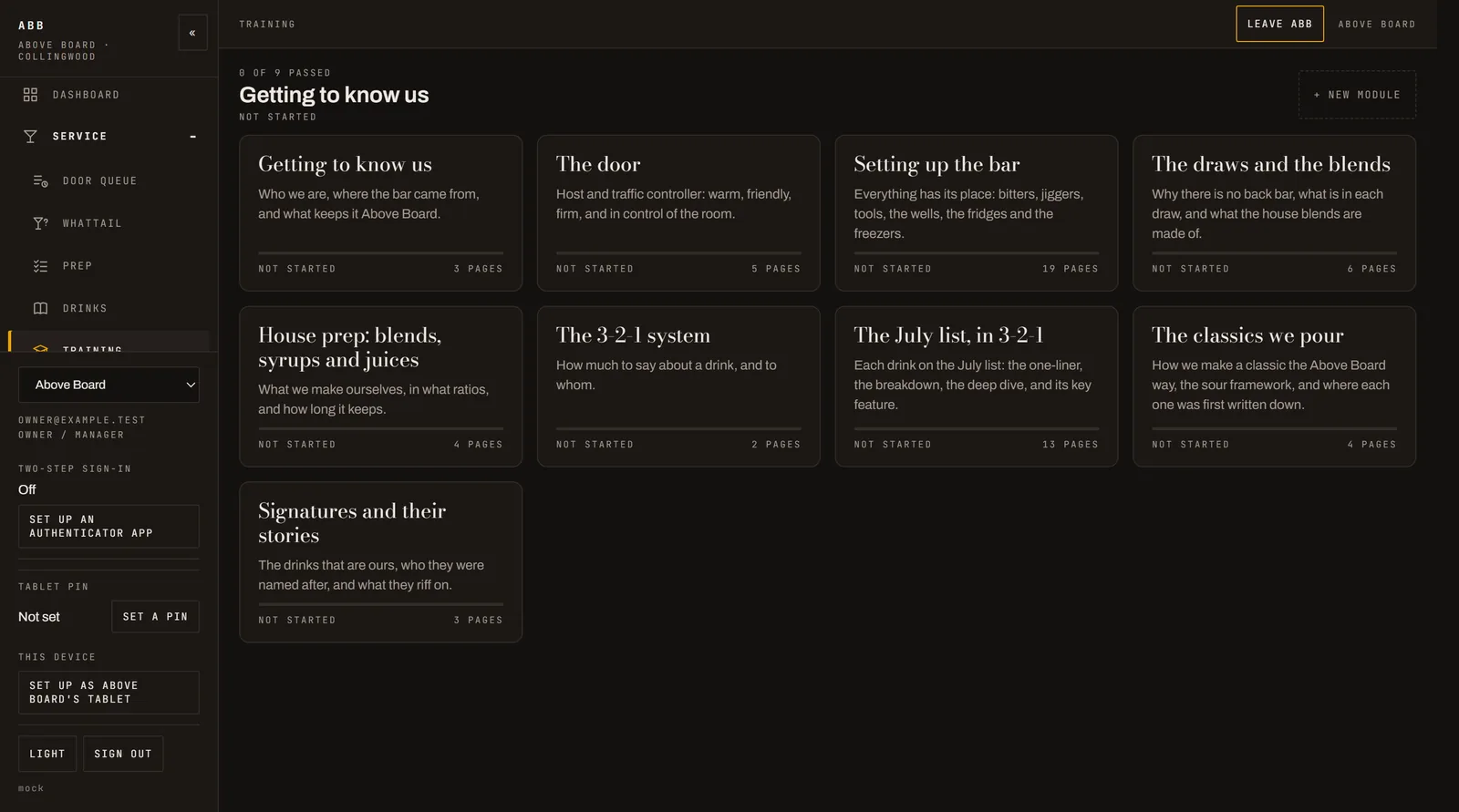
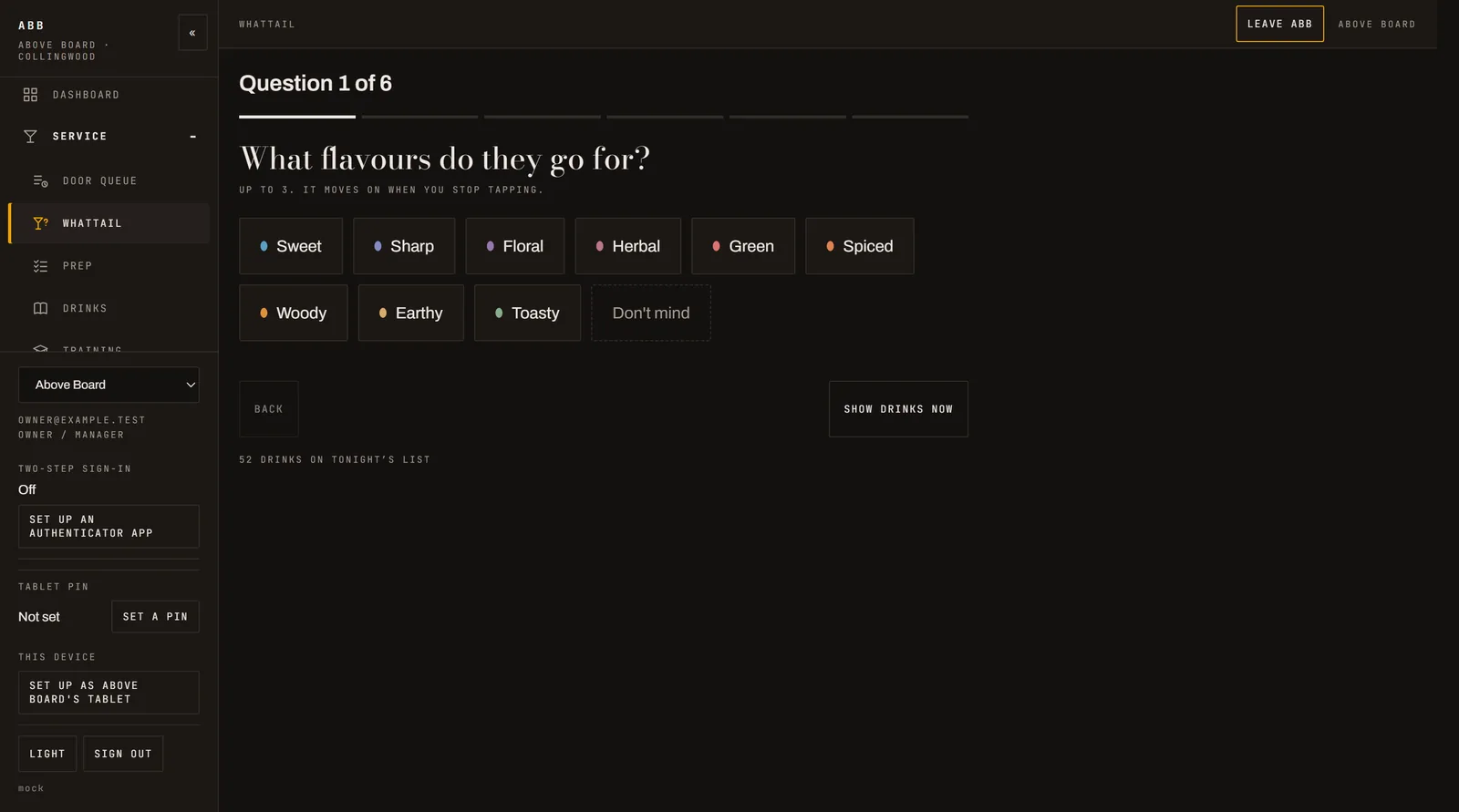
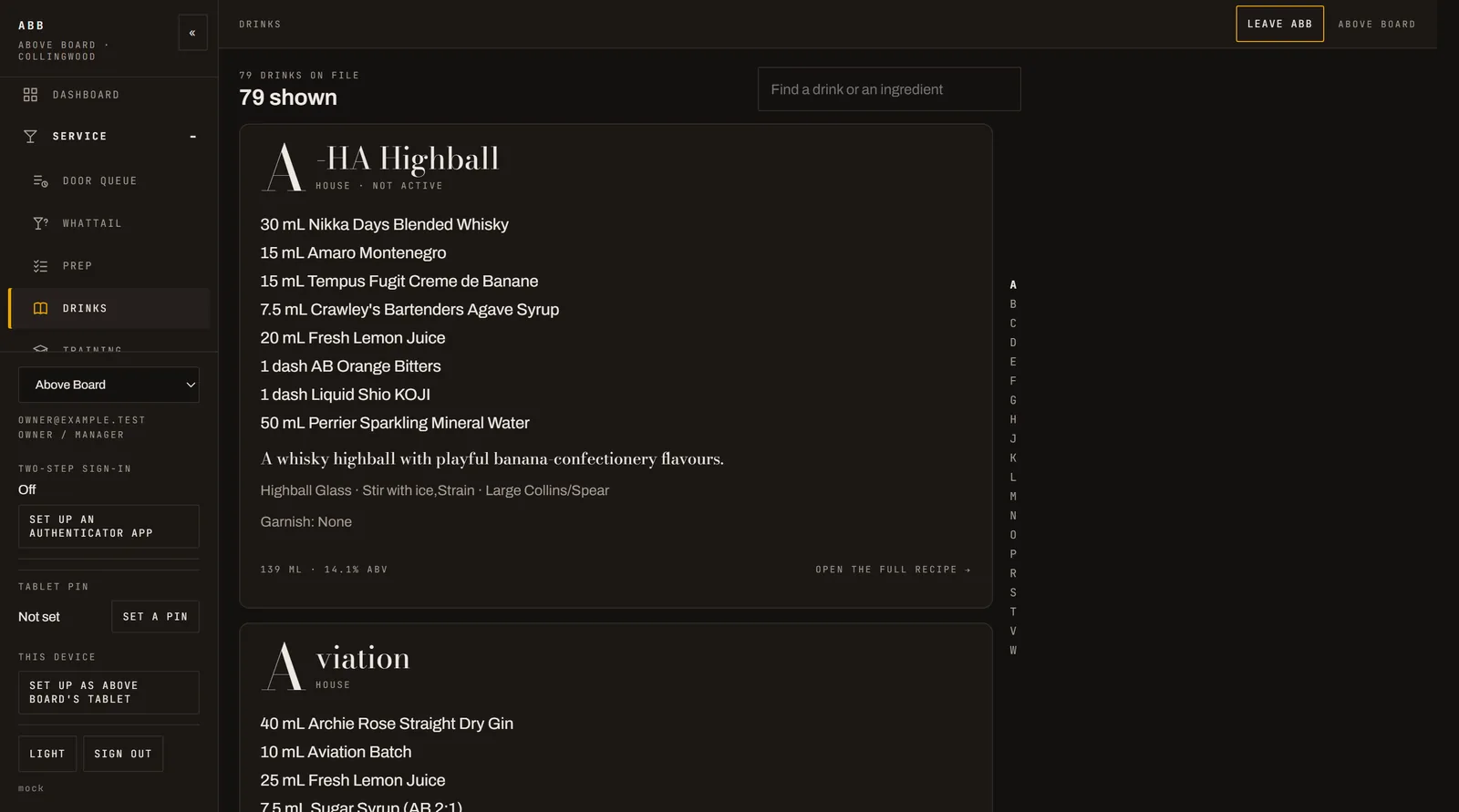
The path a new drink takes today runs through four tools and three people. BarOS collapses it.
Enter the build or ask the development chat to propose one. Cost, GP and ABV update as you type, from tonight's real ingredient prices.
House-made components get a build of their own, land on the prep list and in the stocktake, and top-ups turn into supplier orders with approvals.
Sales come in from the till. Menu engineering places the drink in a quadrant, and the written weekly read tells the owner what to do about it.
The parts that use a model are grounded in the venue's own data, and every call is budgeted before it is made.
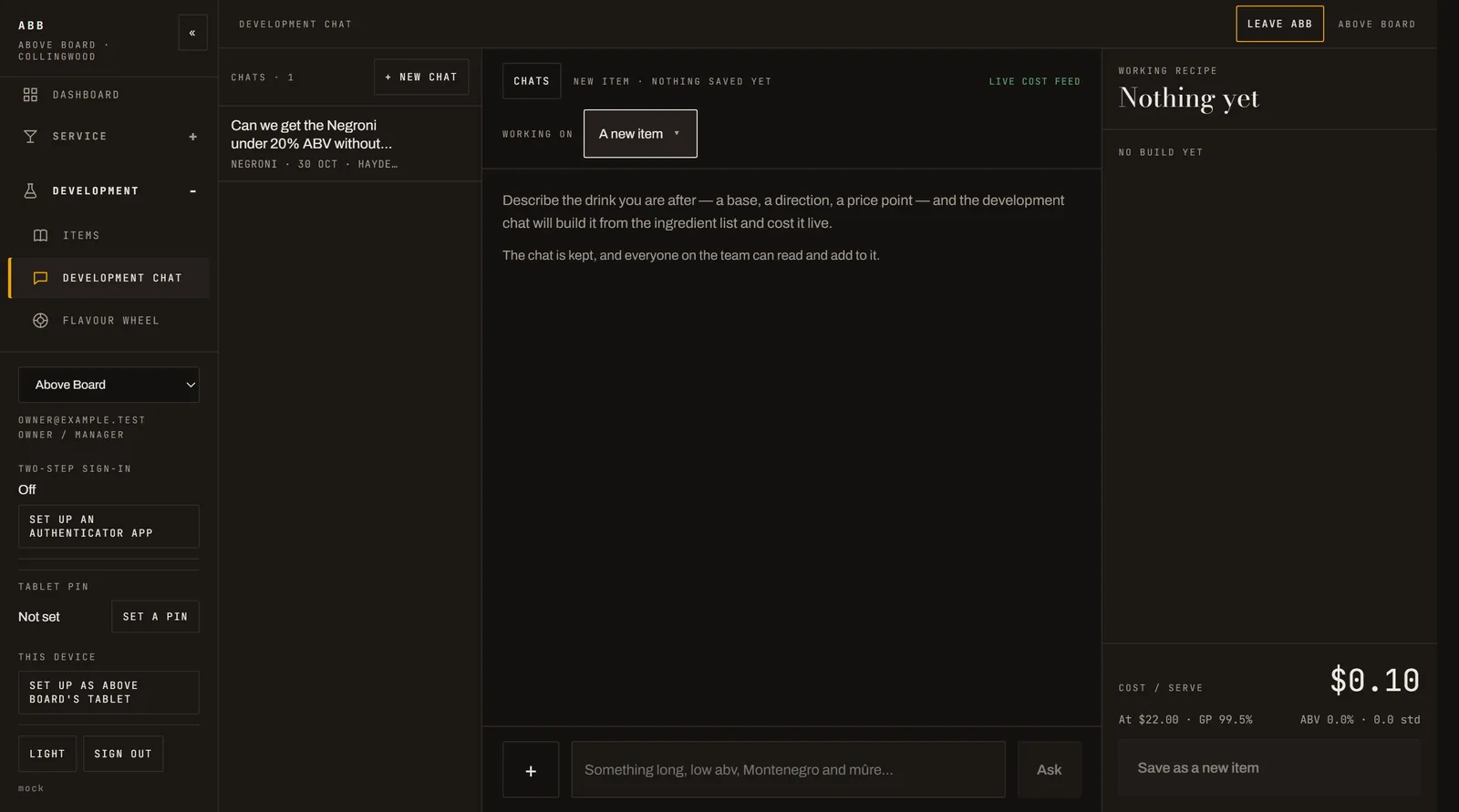
The same discipline Venox brings to client work, applied to our own product.
Serverless end to end, so a quiet Tuesday costs almost nothing and a busy Saturday scales without anyone touching it.
Organisations own venues. Every read and write is scoped, and the owner decides who must use two-step sign-in.
Wastage, orders, variance and GP are all worked out server-side from the ingredient prices on file. The tablet shows, it does not decide.
Every feature, built, partial or planned, is listed and ranked in the open. You will know what you are buying before the first night.
"The work is scattered across places." That is how the bar described adding one drink: a coaster, a no-code app, a spreadsheet for the batch and a notebook for where the bottle goes. BarOS exists to make that one step.
BarOS is in use at its first venue and taking on a small number of early bars. Tell us about yours.
hello@venox.co